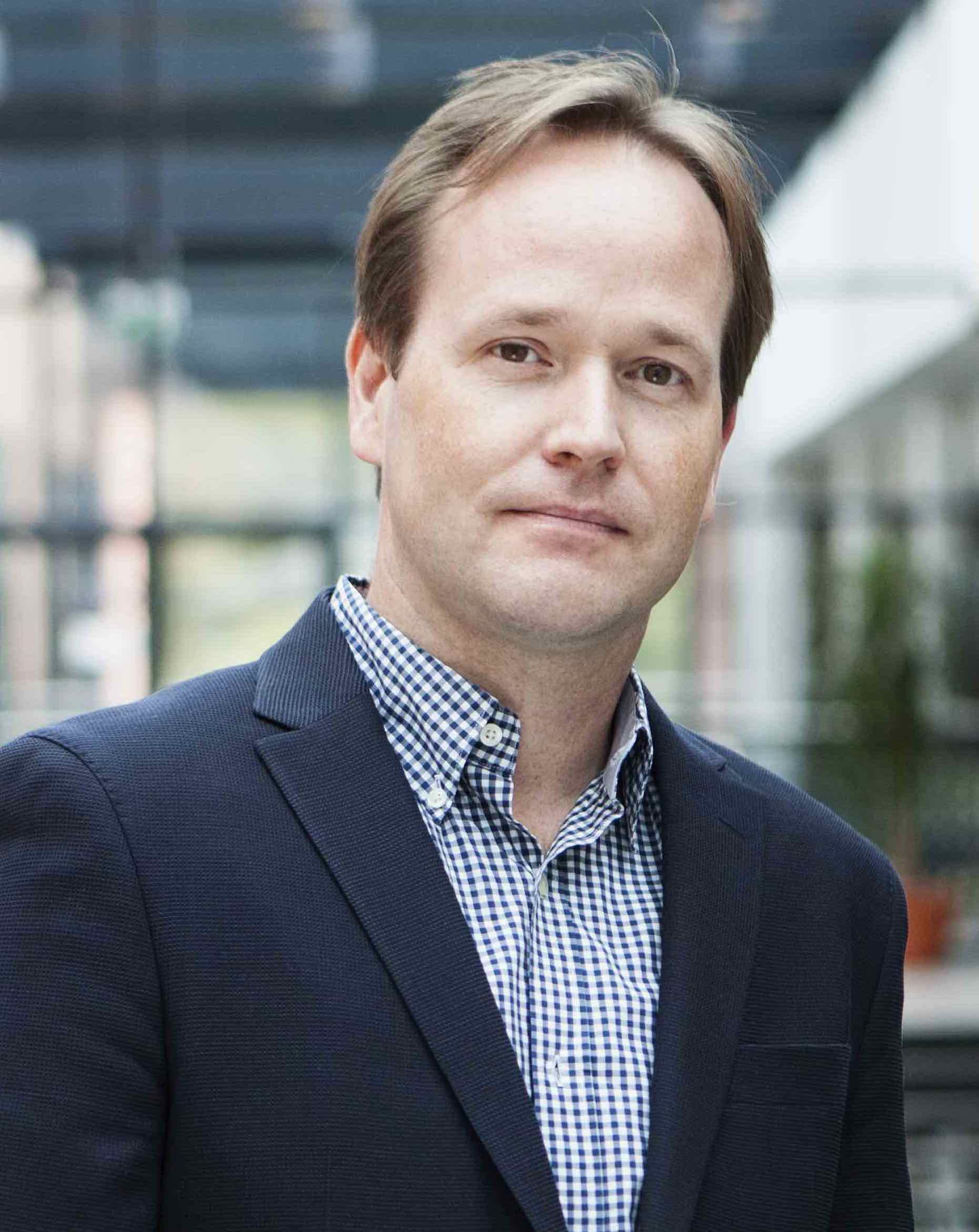
Esa Ollila received the M.Sc. degree in mathematics
from the University of Oulu, in 1998, Ph.D. degree in statistics
with honors from the University of Jyvaskyla, in 2002, and the
D.Sc.(Tech) degree with honors in signal processing from Aalto University,
in 2010. Between 2004 and 2007, he served as a post-doctoral fellow of the
Research Council of Finland. In August 2010, he was appointed as an
Academy Research Fellow - a prestigious research fellowship designated by the
Research Council of Finland - at Aalto University for a five-year term.
Currently, he is a full professor in the School of Electrical Engineering at Aalto University and the Deputy Head of the department.
He also holds the title of docent (adjunct professor) in Statistics at the University of Oulu, Finland.
Prof. Ollila has undertaken several long-term research visits abroad. In the fall of 2001, he was a Visiting Researcher in the Department of Statistics at Pennsylvania State University.
During the 2010-2011 academic year, he served as a Visiting Post-doctoral Research Associate in the Department of Electrical Engineering at Princeton University.
He frequently serves as a reviewer for numerous journals in signal processing, statistics, and machine learning. He is an elected member of the Board of Directors of European Association for Signal Processing
(EURASIP) and an elected member (term 2022-2027) of the IEEE SPS Signal Processing Theory and Methods (SPTM) Technical Committee, where he chairs the awards subcommittee.
He served as an associate editor for the Scandinavian Journal of Statistics from 2020 to 2024. He co-authored a book titled Robust Statistics for Signal Processing,
published in 2018 by Cambridge University Press. He was the General Co-Chair for EUSIPCO-2023 and is the General Co-chair of the
2027 IEEE Statistical Signal Processing Workshop (SSP) to be held in Annecy, France,
June 28 - July 1, 2027.
At Aalto University, Prof. Ollila has been the director of the BSc major in Information Technology since 2016 and the MSc major in Signal Processing and Data Science (SPDS) since 2021.
His research interests lie in the intersection of the fields of signal processing, machine learning and statistics.
Esa Ollila
Professor and Deputy Head of Department
Bio